What Are the Yamas? Understanding Yoga's Ethical Foundations

Key Takeaways:
The Yamas are five ethical principles from the Eight Limbs of Yoga that guide how we relate to ourselves, others, and the world around us.
Ahimsa, Satya, Asteya, Brahmacharya, and Aparigraha each offer a practical way to explore compassion, honesty, respect, moderation, and non-attachment.
The yamas in yoga can shape how you practise on the mat, including how you approach effort, comparison, limitations, and expectations.
Introduction
Many beginners first encounter yoga through physical postures, breathing practices, or meditation. In our yoga beginner classes, we may guide them through Mountain Pose, a gentle sequence, or a few quiet moments of observing the breath. These practices are an important part of yoga, but they represent only one aspect of a much broader tradition.
Traditional yoga also offers teachings on how we relate to ourselves, other people, and the world around us. Among them are the Yamas, ethical principles described as part of the Eight Limbs of Yoga in Patanjali’s Yoga Sutras. Rather than functioning as strict rules or moral commandments, the Yamas in yoga provide a framework for reflection.
Keep reading to learn how yoga ethical principles extend beyond the mat, along with our perspective on the Yamas as yoga teachers.
What You Need to Know About the Yamas
The Yamas are five ethical principles that form the first limb of the Eight Limbs of Yoga. They offer guidance on how we conduct ourselves in daily life and how we interact with the world around us.
In traditional yoga philosophy, personal growth begins with awareness of relationship. This includes our relationship with others, but also our relationship with ourselves. The way we speak to ourselves during a difficult posture, the way we compare our progress with someone else’s, or the way we manage our energy throughout the week can all reveal patterns worth observing.
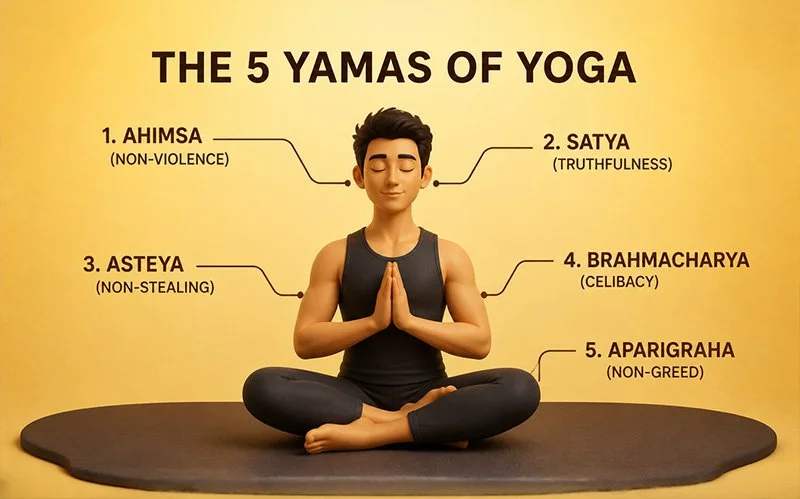
The five Yamas are:
Ahimsa, or non-harming
Satya, or truthfulness
Asteya, or non-stealing
Brahmacharya, or the wise use of energy
Aparigraha, or non-attachment
Together, the Yamas in yoga encourage balance, compassion, honesty, responsibility, and self-awareness.
Where the Yamas in Yoga Come From
The Yamas originate from ancient Indian spiritual traditions and were later set out in Patanjali’s Yoga Sutras as the first of the Eight Limbs of Yoga. Their position reflects the importance of developing an ethical foundation before progressing to deeper practices such as concentration and meditation. Although these teachings are ancient, their focus on kindness, honesty, attachment, moderation, and responsibility remains relevant to everyday life today.
How We Approach the Five Yamas
Each of the five Yamas offers a different principle for reflection, but its meaning becomes clearer when connected to real experiences. From our perspective as yoga teachers, we introduce these teachings through the way students approach movement, effort, rest, comparison, communication, and self-awareness during practice. We also encourage practitioners to notice how the same principles can shape their relationships, decisions, and responses beyond the yoga studio.
Ahimsa: The Practice of Non-Harming
Ahimsa encourages kindness, compassion, and care towards both others and ourselves. In yoga, it means listening to the body, respecting its limits, and recognising that growth can come through patience rather than force. Beyond the mat, it can guide gentler communication, greater self-awareness, and more thoughtful daily choices.
Satya: Living in Truth
Satya is the practice of truthfulness in thought, speech, and action. It involves being honest about our emotions, habits, motivations, and experiences, even when doing so feels uncomfortable. This principle helps practitioners develop greater authenticity and make choices that reflect what they genuinely know to be true.
Asteya: Respecting What Belongs to Others
Asteya is commonly understood as non-stealing, but it also applies to time, attention, energy, opportunities, and personal boundaries. It encourages practitioners to honour commitments, respect others, and appreciate what they already have instead of constantly comparing or seeking more.
Brahmacharya: The Wise Use of Energy
Brahmacharya encourages moderation and the thoughtful use of physical, mental, and emotional energy. It asks practitioners to notice what restores them, what leaves them depleted, and where their attention is directed. In this way, the principle supports mindful living across work, relationships, habits, and yoga practice.
Aparigraha: Learning to Let Go
Aparigraha is the practice of releasing attachment to possessions, expectations, identities, and outcomes. It does not mean becoming passive, but learning to participate fully without trying to control every result. Through this principle, practitioners can create more space for acceptance, gratitude, and presence.
How the Yamas Influence Yoga Practice
The Yamas shape the awareness brought into yoga practice, including how practitioners respect their limits, relate to others, and respond to comparison or discomfort. This self-awareness can also help someone choose the type of guidance that suits them. Group yoga classes may appeal to practitioners who feel comfortable learning alongside others and developing confidence in a shared setting. Those managing an injury, working with specific limitations, or needing more personalised modifications may find private yoga sessions more supportive.
Drawing from our teaching experience, the Yamas are most useful when they are connected to what actually happens during practice. They may influence how a student responds to discomfort, approaches progress, respects personal limits, or relates to others in a shared class.
We have also found that these principles can take different forms for each practitioner. A beginner may explore Ahimsa by learning when to rest or modify a posture, while a more experienced student may practise Aparigraha by becoming less attached to a particular outcome. For this reason, we do not assume the Yamas as fixed instructions that everyone must apply in the same way. We therefore focus on helping students develop greater awareness of how they practise and how that awareness can extend into daily life.
Bringing the Yamas Into Everyday Practice
The Yamas in yoga guide how we relate to ourselves, other people, and the world around us. Through Ahimsa, Satya, Asteya, Brahmacharya, and Aparigraha, practitioners are encouraged to develop compassion, honesty, respect, moderation, and acceptance in both practice and daily life.
At The Yoga House, we approach yoga as a holistic discipline that brings together movement, breathwork, meditation, self-reflection, and traditional yogic teachings. Through breath-led movement, reflective cues, and mindful modifications, our public and private yoga sessions help practitioners of different experience levels explore these principles in a practical and meaningful way.
Contact us to learn more about our classes and holistic wellness offerings.
 Chat
Chat